UNITED STATES HISTORICAL FLAGS (1)
July 4, 2026
Greetings,
I'd like to introduce myself. My name is Dan Hancock who has shared space on the third rock from the sun for the last 77+ years. In that time, I have had a myriad of experiences that have steered me to be an avid amateur historian. That is what led me to this project; to share the history of our flags over the last 250+ years of this nations journey.
Originally, I was going to show all 50+ flag at one time on the 4th of July, 2026. However, I was over ridden by someone near and dear to me, my wife.
So together with my children we (really, they) came up with a novel alternative. That is to display one flag a day using a QR code. This would then allow me to physically display one flag a day for 50 some days and at the same time provide some background to each flag for those unable to visit in person. The flags will not necessarily, be in conilogical order, but I think that adds to the suspense of which flag is next.
If you miss a day, don't worry, I will update this blog so that you don't miss a flag.
My hope is that you will find this informative, and that you can dazzle friends with your wealth of knowledge that you have been able to absorb concerning The Flags of the United States.
Enjoy
Date: July 4, 2026
US Historical Flag on Display:
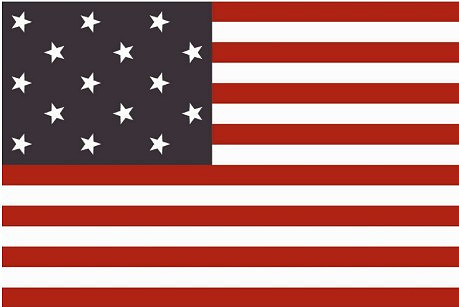
The 15 Star Flag (The Star-Spangled Banner)

History of the Flag:
O say can you see, by the dawn’s early light……
Whose broad stripes and bright stars through the perilous fight……
O say does that star-spangled banner yet wave
O’er the land of the free and the home of the brave?
Yes, this is the flag that inspired Francis Scott Key to author a poem that would later become our national anthem.
The 15-star American flag was the official U.S. flag from 1795 to 1818. It is the only U.S. flag to feature more than 13 stripes. This design flew over Fort McHenry in 1814. The massive 42 x 30-foot flag is preserved at the Smithsonian Institute.
When Vermont (3/4/1791) and Kentucky (6/1/1792) joined the nation, Congress passed a law in 1794 to add two stars and two stripes to the flag. This made a total of 15 stars and 15 stripes. The stars were arranged in five rows of three.
The 15-stripe plan was stopped in 1818. The country was growing fast. Lawmakers realized that adding a new stripe for every new state would make the flag look too messy. Congress passed a new law in 1818. It stated that the flag would permanently go back to 13 stripes to honor the original colonies. Moving forward, only one new star would be added for each new state. A new star is added to the U.S. flag on the July 4th following the date a new state officially joins the Union.
This flag flew during the administrations or John Adams, Thomas Jefferson, James Madison and a portion of James Monroe's presidency.
This flag remains a legal flag today and is never obsolete
Source: Smithsonian Institution / Freedomandglory.com
Date: July 5, 2026
US Historical Flag on Display:
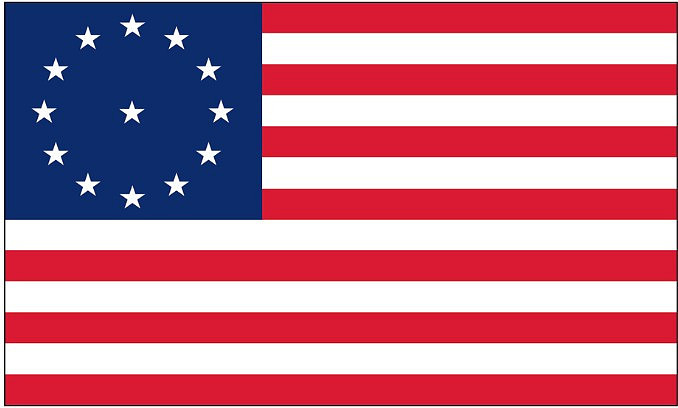
The Cowpens Flag
History of the Flag:
The Cowpens flag is a historic American Revolutionary War banner. Also known as the 3rd Maryland Regiment Flag, it features the 13 alternating red and white stripes of the original colonies, but with a unique 13-star canton: 12 stars arranged in a circle with the 13th star in the center.
While legend claimed the banner was carried by William Batchelor at the Battle of Cowpens in 1781, historians suggest it was actually used later by his son during the War of 1812. This flag shares a similar design to the Betsy Ross flag. This flag was famously featured in Archibald Willard's iconic 1876 painting, The Spirit of '76. So, there is an Ohio Connection to this particular flag, since Archibald Willard was born in Bedford, Ohio and lived as an adult in Wellington, Ohio
Source: Wikipedia
Date: July 6, 2026
US Historical Flag on Display:
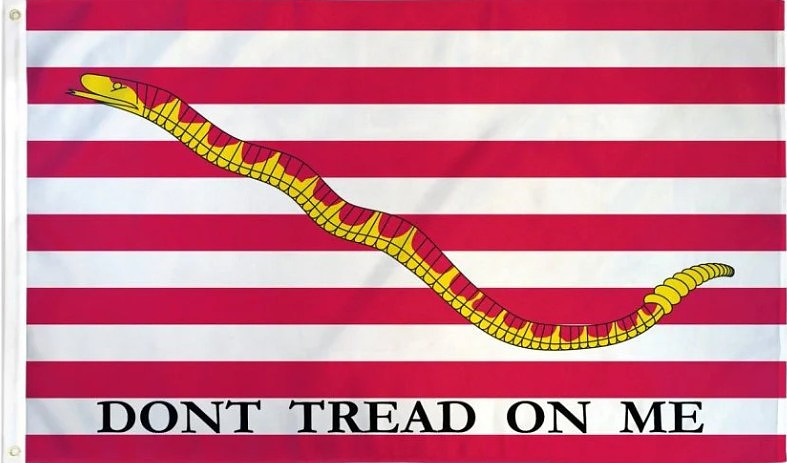
First Naval Jack Flag
History of the Flag:
The First Navy Jack flag is a revolutionary war flag featuring thirteen red and white stripes with a rattlesnake and the words “Don’t Tread On Me” emblazoned across the center.
The thirteen stripes are intended to represent the original 13 colonies that eventually became the United States of America. The rattlesnake is a historic symbol of resistance.
This flag was likely developed in the late 1700s. While the flag has had various uses throughout the years, it has been most commonly used as a maritime flag by the US Navy.
Source: Gettysburg Flag Works
Date: July 7, 2026
US Historical Flag on Display:
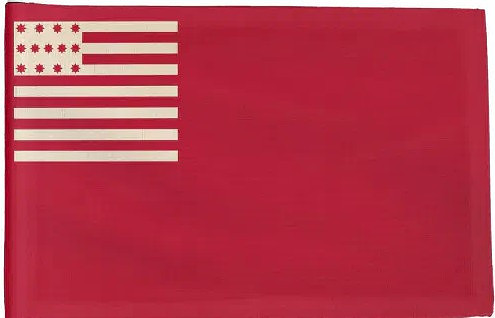
The Brandywine Flag
History of the Flag:
The Brandywine Flag is a historic American Revolutionary War banner renowned as the earliest surviving artifact featuring a stars-and-stripes configuration. It is a rare example of early design variations following the Continental Congress's Flag Resolution of June 14, 1777. This flag was carried by Captain Robert Wilson's company within the 7th Pennsylvania Regiment. It is Named for its deployment at the Battle of Brandywine on September 11, 1777. This unique flag consists primarily of an unadorned, solid red silk background. It features a miniature "flag within a flag" layout in the upper-left corner. The canton contains 13 alternating red and white stripes, starting and ending with white. Contains 13 white, eight-pointed stars set against a white background. Arranged in a horizontal 4-5-4 grid layout, likely influenced by the Francis Hopkinson national flag design
Source: Wikipedia
Date: July 8, 2026
US Historical Flag on Display:
The Bennington Flag
History of the Flag:
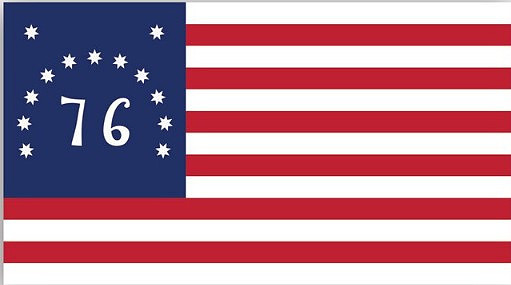
The '76 Bennington Flag, like many of the earliest American flags, was designed during the American Revolution to inspire pride, unity, and a sense of patriotism among the colonies. The flag’s creation is most commonly associated with the Battle of Bennington, which took place on August 16, 1777, during the Revolutionary War. This decisive battle saw American forces, led by General John Stark, defeat a much larger British and Native American force, securing vital supplies and boosting the morale of the Continental Army.
The flag itself is notable for its bold and striking design. It features 13 alternating red and white stripes, representing the 13 colonies that fought for independence, and a blue canton in the upper left-hand corner with 13 white stars arranged in a circle—symbolizing the unity of the new nation. The numbers “76” are emblazoned prominently on the flag, marking the year of the Declaration of Independence and underscoring the revolutionary spirit of the time.
Some theories suggest that the '76 Bennington Flag was created by members of the militia who fought in the Battle of Bennington. Others point to it being produced by local supporters of the American cause as a way to rally the troops and celebrate the victory. Regardless of its exact origins, the flag has become an enduring symbol of American independence and the resolve of the people who fought for it.
Source: Gates Flag and Banner
Date: July 9, 2026
US Historical Flag on Display:
Join or Die Flag
History of the Flag:
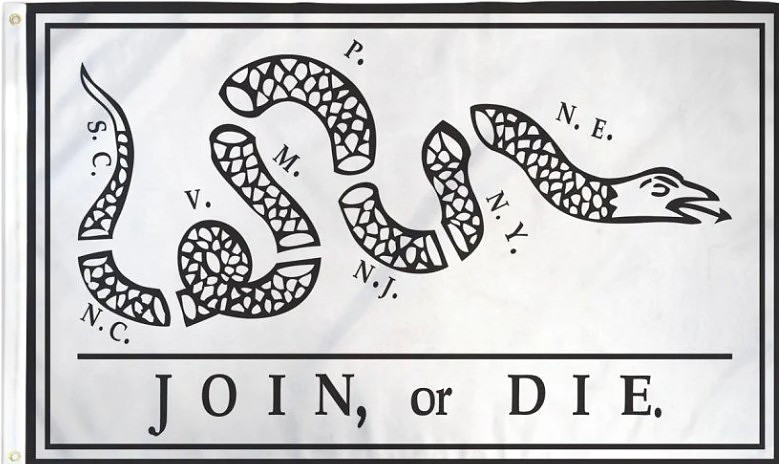
The "Join, or Die" flag (based on a 1754 political cartoon by Benjamin Franklin) means that the American colonies must unite to survive. It warns that divided colonies would be easily defeated by enemies, just as a severed snake would die, but would thrive if pieced back together.
During the American Revolution (1765-1775) the colonists revived the slogan (sometimes changing it to "Unite, or Die") as a rallying cry against British taxation without representation, such as the Stamp Act.
The Meaning of the Snake: The snake is divided into eight segments representing the colonies or regions at the time (New England, New York, New Jersey, Pennsylvania, Maryland, Virginia, North Carolina, and South Carolina). The imagery was based on an 18th-century superstition that a cut snake could come back to life if its pieces were joined before sunset.
Source: Wikipedia
Date: July 10, 2026
US Historical Flag on Display:
Washington Headquarters Flag

History of the Flag:
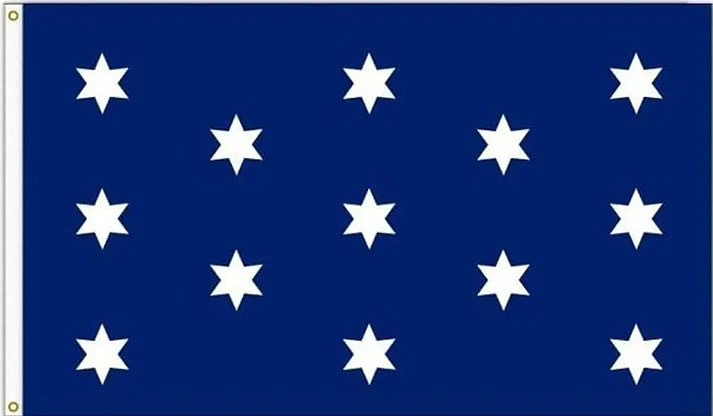
The Washington Headquarters Flag, also known as the Commander-in-Chief's Standard, is a significant historical banner that marked the personal presence of General George Washington during the American Revolutionary War. Believed to be the earliest surviving 13-star American flag, it served as a vital symbol of military leadership and early American identity.
Following European military tradition, the flag traveled everywhere Washington did. It flew outside his personal tent and temporary headquarters, most famously during the brutal 1777–1778 winter encampment at Valley Forge, Pennsylvania
The light blue color matched the silk sash Washington wore across his chest, and the six-pointed stars mirrored the silver insignias on his uniform epaulets.
Source: The Shoppes at Mt. Vernon / CWR Flags
Date: July 11, 2026
US Historical Flag on Display:
The Betsy Ross Flag
History of the Flag:
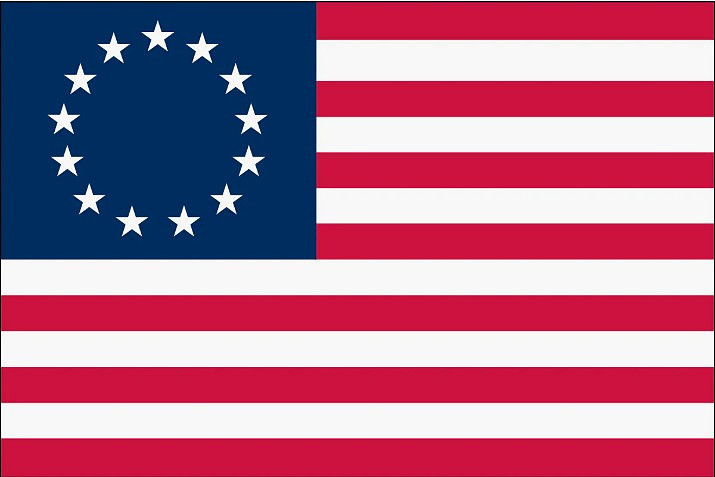
The Betsy Ross flag is an early American flag design featuring thirteen stripes and thirteen white stars arranged in a circle on a blue canton. It symbolizes the original thirteen colonies that declared independence.
The Circle: The stars arranged in a circle signify equality among the thirteen original colonies.
The Stars: Unlike modern American flags, the stars on the Betsy Ross design typically have five points instead of six, and they traditionally use a five-point, single-snip folding method made famous by the folklore.
Stripes: Seven red stripes and six white stripes represent the original thirteen colonies.
According to popular American legend, Betsy Ross (a Philadelphia upholsterer) sewed the first flag in 1776 after a visit from George Washington, Robert Morris, and George Ross. However, historians point out that there is no official documentation—such as receipts or diary entries from that era—to prove the legend.
This flag although popular, is not considered a legal flag today (with the 13 stars arranged in a circle) and was never formally designated by Congress as an official flag of the United States
Source: Historic Philadelphia / Wikipedia
Date: July 12, 2026
US Historical Flag on Display:
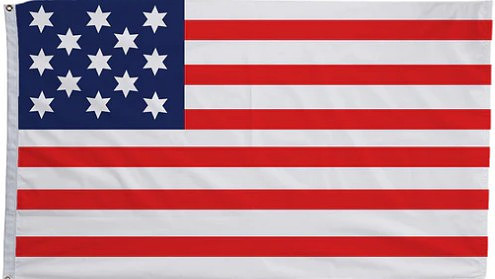
The Hopkinson 13 Star Flag
History of the Flag:
Hopkinson developed many seals and symbols during the US’s infancy, including the Grand Seal of the United States. However, there’s no doubt that his most important project was the national flag. He designed it while serving on the Continental Marine Committee, in a position known today as the Secretary of the Navy. In 1777, the flag was adopted as the US’s official national flag, and Hopkinson became the creator of the Stars and Stripes.
While Hopkinson originally received nothing for his work designing the Grand Seal, the US flag, and various other symbols, he believed he was due compensation. So, he billed Congress for his work. His price? A quarter cask of the public wine.
The dates when the original colonies became states: Delaware (12/7/1787), Pennsylvania (12/12/1787), New Jersey (12/18/1787), Georgia (1/2/1778), Connecticut (1/9/1788), Massachusetts (2/6/1788), Maryland (4/28/1788), South Carolina (5/23/1788), New Hampshire (6/21/1788), Virginia (6/25/1788), New York (7/26/1788), North Carolina (11/21/1789), Rhode Island (5/29/1790).
This flag flew during George Washington’s presidency.
This flag is the oldest legal flag is U.S. history and is never obsolete.
Source: Patriotwood.com
Date: July 13, 2026
US Historical Flag on Display:
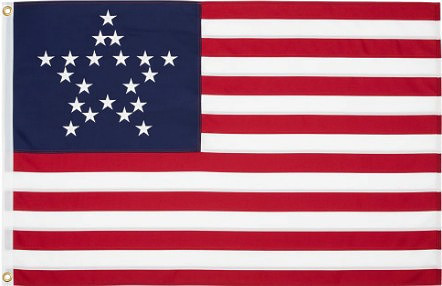
The 20 Star Great Star Flag
History of the Flag:
By January of 1817, confusion had engulfed the American flag making industry. Since passage of the Flag Act of 1794, four states had been added to the Union, but the Flag had not been officially updated. Some Flag makers took it upon themselves to add stars and stripes. Others made Flags with only 13 stars and 13 stripes. With another state to be added that year, Congress did what they usually do when action is required, they formed a committee and did nothing.
The committee consulted Captain Samuel Reid, U.S.N. He recommended returning the number of stripes to 13. Capt. Reid suggested three possible designs: one which was a 13 stripe/20-star Flag, with the stars laid out in the shape of a great star
After much debate, the Flag Act of 1818 was at last passed and signed into law by President Monroe on April 4th. The Act called for 13 horizontal red and white stripes, 20 white stars and for a star to be added on the 4th of July following the admission of a new state. It did not specify a layout for the stars.
An executive order from President Monroe required a block pattern for stars on Flags flown by navy ships. Flag makers were left to arrange the stars on national Flags as they wished. Great Star patterns remained popular throughout the 19th century.
This flag flew during the Monroe administration.
It is not considered a legal flag of the U.S.
Source: americanflagstories.net
Date: July 14, 2026
US Historical Flag on Display:
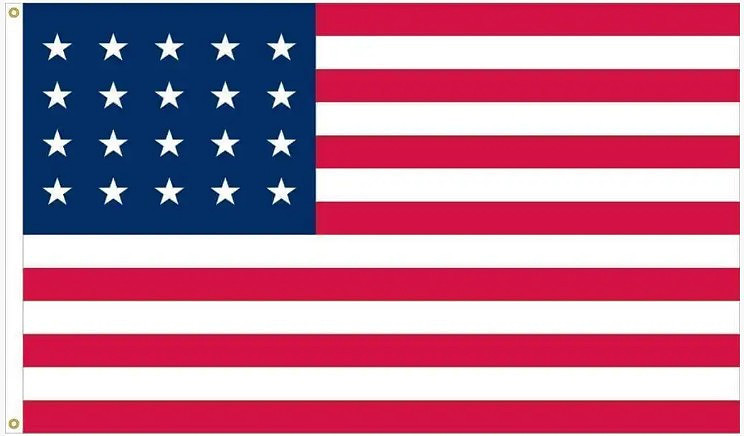
The 20 Star Flag
History of the Flag:
The 20-star U.S. flag was official from July 4, 1818, to July 3, 1819. It honored five new states: Tennessee, Ohio, Louisiana, Indiana, and Mississippi. Congress passed the Flag Act of 1818 to keep 13 stripes and add a star for each new state.
The new states added were: Tennessee (6/1/1791), OH-IO (3/1/1803), Louisiana (4/30/1812), Indiana (12/11/1816), and Mississippi (12/10/1817).
Design: 13 stripes and 20 stars. As you will see later on, there were different configuration for the star in the blue canton.
James Monroe was president.
This flag remains a legal flag today and is never obsolete.
Source: americanflagstories.net
Date: July 15, 2026
US Historical Flag on Display:
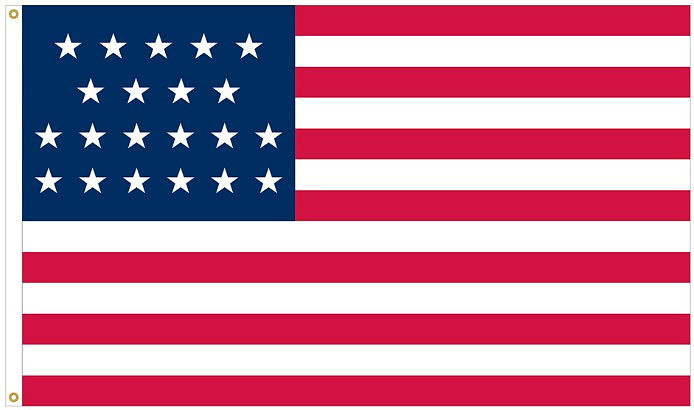
The 21 Star Flag
History of the Flag:
The 21-star U.S. flag became official on July 4, 1819, to mark Illinois' admission as the 21st state December 3, 1818. It was used for exactly one year. Because flags in that era were rare and not mass-produced, authentic 21-star flags are among the rarest in American history. Only 365 days after it was adopted, two more states joined the Union.
Because there were no strict rules on star patterns at the time, many 21-star flags featured a "Grand Luminary" design, where the 21 stars were arranged to form the shape of one massive star.
The original flags were mostly made by hand using cotton and natural dyes, making surviving specimens highly valuable to collectors and historians. In fact, the Abraham Lincoln Presidential Library & Museum in Springfield acquired an authentic 21-star flag for its historical collection.
This flag flew during the administration of James Monroe.
This flag never becomes obsolete, you can still legally fly the 21-star design.
Source: Abraham Lincoln Presidential Museum and Library
Date: July 16, 2026
US Historical Flag on Display:
AN APPEAL TO HEAVEN

History of the Flag:
The Appeal to Heaven Flag, also known as the Pine Tree Flag, is one of the earliest flags associated with the American Revolutionary War.
In October 1775, George Washington authorized a small fleet of six armed schooners to intercept British supply ships. The vessels reportedly flew a white flag featuring a green pine tree and the motto "An Appeal to Heaven".
The pine tree had long been a symbol of New England because white pines were valuable for ship masts. The British Crown claimed many of the largest trees for the Royal Navy, creating resentment among colonists since the tree had appeared on earlier colonial protest flags. The pine tree came to symbolize Liberty, New England identity, and Resistance to British authority.
Source: Wikipedia
Date: July 17, 2026
US Historical Flag on Display:
The 23 Star Flag
History of the Flag:
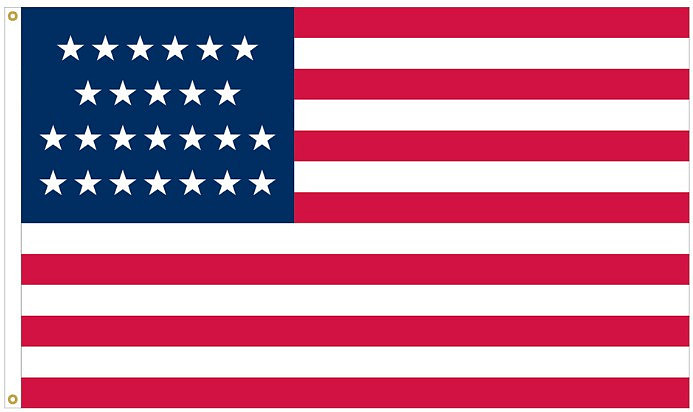
The 23-star U.S. flag became official on July 4, 1820, following the admission of Alabama (December 14, 1819) and Maine (March 15, 1820). Flown exclusively under President James Monroe, it represented the young nation's rapid expansion during the post-War of 1812 era.
The 23-star iteration was only the official national flag for two years. However, because stars were only legally added on the Fourth of July following a state's entry into the Union, the physical design captured a very specific snapshot of American geography.
In the decades following its short official lifespan, the 23-star flag took on a highly controversial political identity. During the American Civil War, abolitionists sometimes flew flags with exactly 23 stars. Intended as a pointed political statement against Abraham Lincoln's early wishes to keep the South included in the Union, these abolitionist flags eliminated the eleven seceding Confederate states from the star count entirely.
No U.S. flag ever becomes obsolete by law, meaning the 23-star version remains a legitimate, flyable historical artifact today.
Source: Smithsonian Institute / Flag Day Monument
Date: July 18, 2026
US Historical Flag on Display:
The 24 Star Flag
History of the Flag:
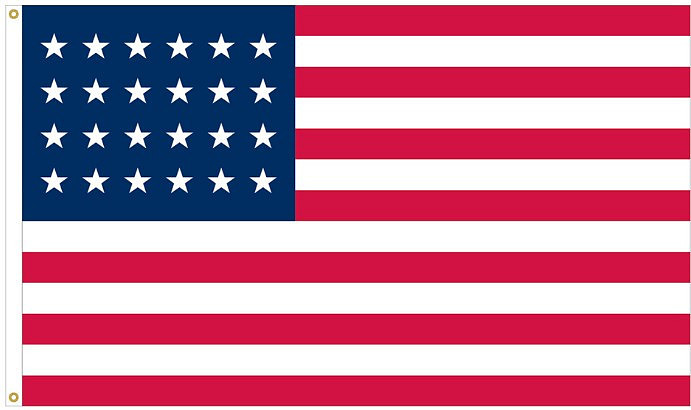
The 24-star flag became the official United States flag on July 4, 1822. It was flown for 14 years to recognize the admission of Missouri (8/10/1821) as the 24th state. This historically significant flag remained in use until 1836.
The 24-star flag is deeply rooted in American lore, most notably as the original flag Sea Captain William Driver nicknamed "Old Glory". Driver received a 24-star homemade flag from his mother in 1824, which he famously flew on voyages around the world.
It served as the national banner during the presidencies of James Monroe, John Quincy Adams, and Andrew Jackson.
Because no official U.S. flag ever becomes obsolete, you can still legally fly the 24-star design.
Source: Smithsonian Institute / American Flag Stories
Date: July 19, 2026
US Historical Flag on Display:
The Guilford Flag
History of the Flag:
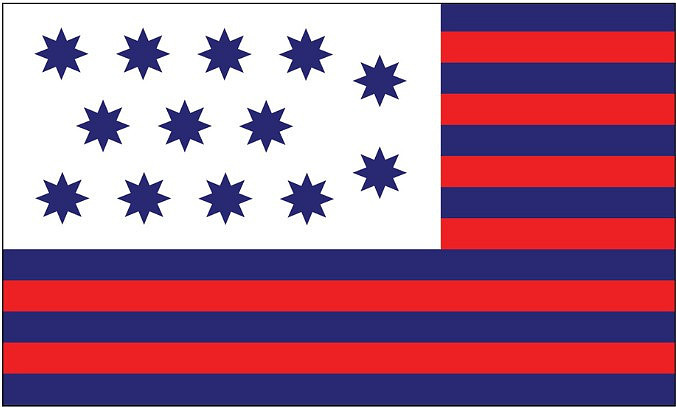
The Guilford Courthouse flag is the name given to a North Carolina militia banner that was claimed to have flown at the Battle of Guilford Courthouse (March 15, 1781, Greensboro, North Carolina). However, analysis by the National Park Service showed that it was made of cotton and, therefore, was made at some later date.
The flag is recognizable by the reverse colors normally seen on American flags: red and blue stripes in the field with eight-pointed blue stars on an elongated white canton. The unique colors and dimensions are sometimes described as showing a lack of uniformity in a young nation at war, with poor infrastructure and bad communication.
However, it was common practice during the Revolution for military units to carry flags that featured common American symbols (such as stripes and stars), but to make them uniquely identifiable for use as a company or regimental flag. As such, this flag was probably never intended for use as a national flag.
Source: Wikipedia
Date: July 20, 2026
US Historical Flag on Display:
The 25 Star Flag
History of the Flag:
The 25-star U.S. flag became official on July 4, 1836, following Arkansas's admission to the Union on June 15, 1836. It featured 13 stripes and 25 stars arranged in a grid. The design typically featured 2 rows of seven stars, 1 row of 6 stars and 1 row of 5 stars, though many civilian flag-makers arranged them creatively or in a large "great star" pattern.
Because westward expansion was booming, states were entering the Union in rapid succession. Just months after the 25-star flag was adopted, Michigan became the 26th state.
As a result, this particular design is one of the shortest-lived iterations in U.S. flag history, flying for exactly one year.
Presidents Andrew Jackson and Martin Van Buren both served under this flag. The design typically featured five rows of five stars each, though many civilian flag-makers arranged them creatively or in a large "great star" pattern.
This flag never becomes obsolete, you can still legally fly the 25-star design.
Source: Smithsonian Institute
Date: July 21, 2026
US Historical Flag on Display:
The 26 Star Flag
History of the Flag:
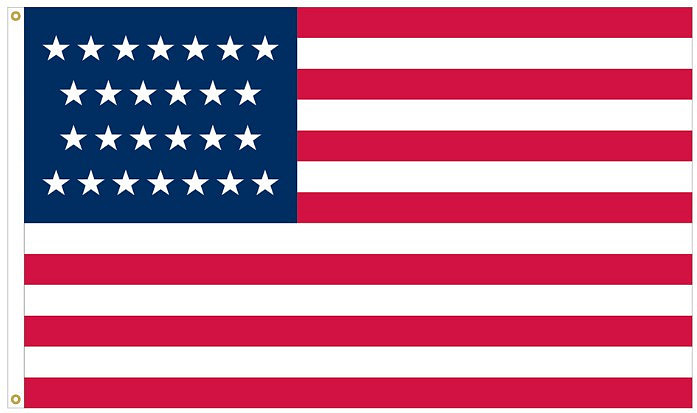
The 26-star American flag became the official U.S. flag on July 4, 1837. It flew for eight years until July 3, 1845, and was retired after Florida’s admission into the union.
The additional star was due to Michigan’s (the correct spelling is Michigan) admission to the Union on January 26, 1837. (Notice, that, the state up north was admitted 34 years after the Buckeye State). They have been trying to catchup ever since!
Four presidents served under this flag: Martin Van Buren, William Henry Harrison, John Tyler, and James Polk.
Historical Variations: While standard versions had stars neatly aligned in rows, there were fascinating unofficial designs, such as the Great Star pattern (where the stars are clustered to form one large star). The variations are not shown as we go through the historical flags.
The standard version of this flag never becomes obsolete, you can still legally fly the 26-star design.
Source: Smithsonian Institute/CRW Flags
Date: July 22, 2026
US Historical Flag on Display:
The Bedford Flag
History of the Flag:
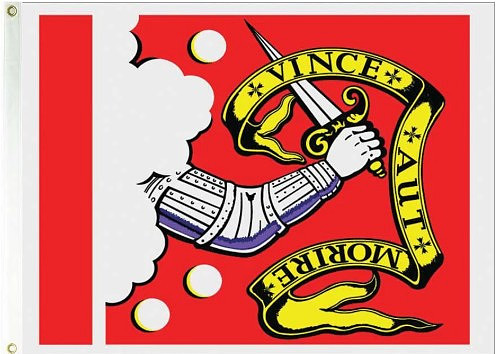
The Bedford Flag is celebrated as the oldest known surviving, intact flag in the United States. It is most famous for its association with the Bedford Minutemen who carried it into the Battles of Lexington and Concord on April 19, 1775, marking the opening conflict of the American Revolutionary War.
The central emblem depicts a silver, armored arm emerging from a cloud and firmly grasping a raised straight sword. Three silver cannonballs hang suspended in the air. Notice the Motto: A gold ribbon loops around the arm displaying the Latin phrase "VINCE AUT MORIRE". This translates to "Conquer or Die"
Source: Wikipedia / The Bedford Public Library
Date: July 23, 2026
US Historical Flag on Display:
The 27 Star Flag
 History of the Flag:
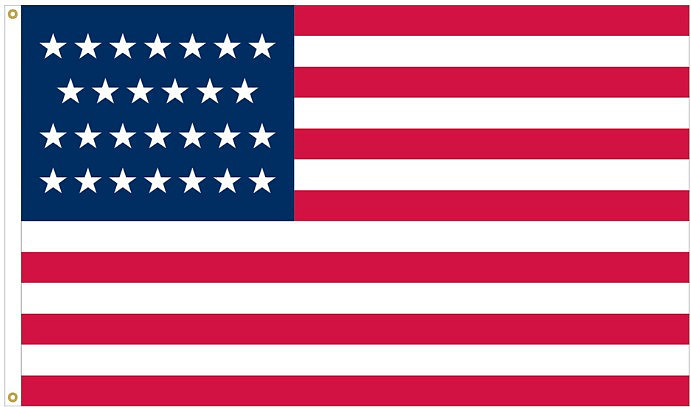
The 27-star American flag became the official United States flag on July 4, 1845. It recognized the admission of Florida as the 27th state. This specific design remained active for only one year until July 3, 1846.
Just an aside, the oldest permanent European settlement in the United States is in Florida. It is St. Augustine.
It flew during president James K. Polk’s administration.
Although it had a brief lifespan, this is still a legal flag and can be flown at any time.
If anyone ever asks you how many official flag redesigns the United States has gone through since the original 13-star version, remember the number “27”.
Source: Military Wives Network/You Tube
Date: July 24, 2026
US Historical Flag on Display:
The 28 Star Flag
History of the Flag:
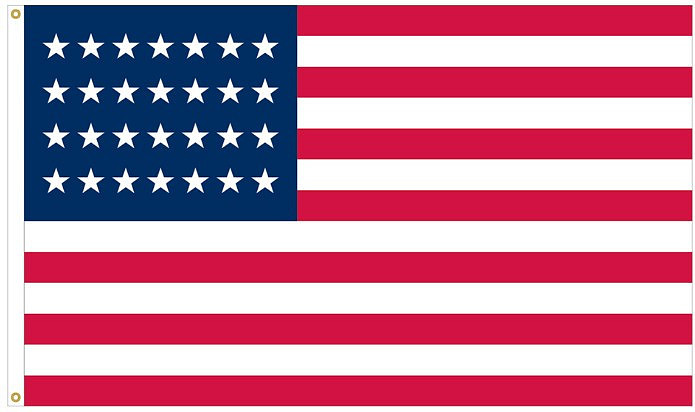
The “Lone Star State” is actually the 28th star on the flag following its admission to the union on December 29, 1845.
The 28-star American flag became official on July 4, 1846. It flew for exactly one year until July 1847, making original historical artifacts incredibly rare.
The 28-star flag was only official for a single year.
Before standardized flag laws, the stars were arranged creatively. The 28-star flag famously featured the "Great Luminary" pattern, where smaller stars were grouped in a circle to form the shape of one massive star. That variation is not shown in this ongoing presentation.
Like all historical American flags, the 28-star flag is never considered obsolete and remains perfectly legal to fly at any time.
Source: thestoryoftexas.com
Date: July 25, 2026
US Historical Flag on Display:
The Sons of Liberty Flag
History of the Flag:
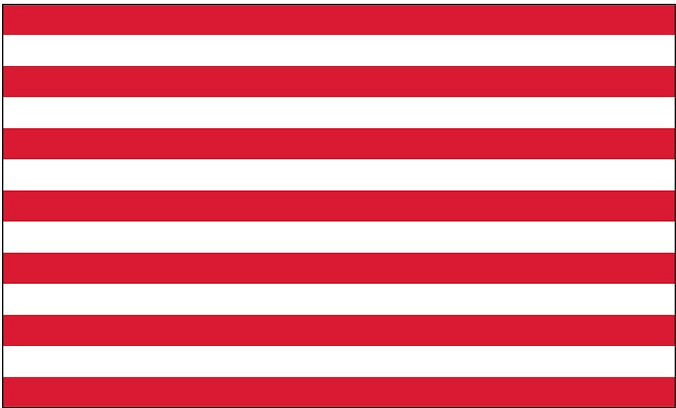
The Sons of Liberty flag, also known as the "Rebellious Stripes," was a powerful symbol of colonial resistance against British taxation. Originally designed with nine vertical stripes, each vertical stripe represented one of the nine colonies that attended the Stamp Act Congress in 1765 to protest "taxation without representation".
It was famously flown from a "Liberty Pole" above Boston's Liberty Tree. When the British cut down the tree, the rebellious flag remained a defiant fixture until the Crown outlawed it. it later evolved into a 13-stripe version, laying the visual foundation for the modern American flag.
This design symbolized unity across all 13 colonies and heavily influenced the final design of the American Stars and Stripes adopted in 1777.
Source: AmericanRevolution.org
Date: July 26, 2026
US Historical Flag on Display:
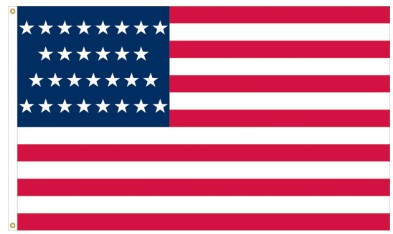
The 29 Star Flag
History of the Flag:
The 29-star U.S. flag became official on July 4, 1847, following the admission of Iowa as the 29th state on December 28, 1846.
It was used for exactly one year until July 3, 1848. The only U.S. president to serve under this specific flag design was James K. Polk.
Historically, this version is relatively rare because it was quickly superseded by a 30-star flag.
Like all historical American flags, the 28-star flag is never considered obsolete and remains perfectly legal to fly at any time.
Source: Smithsonian
Date: July 27, 2026
US Historical Flag on Display:
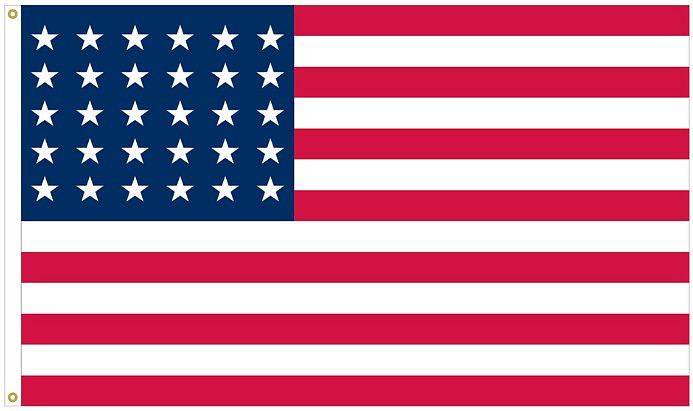
The 30 Star Flag
History of the Flag:
The 30-star U.S. flag became official on July 4, 1848, after Wisconsin was admitted as the 30th state on May 29, 1848.
The 30-star flag flew for three years, until California was admitted to the Union.
Three presidents served under this flag: James K. Polk, Zachary Taylor, and Millard Fillmore.
Because the Flag Act of 1818 only dictated that stars must be added for new states, there was no mandated arrangement for the 30 stars, resulting in diverse patterns (like concentric circles or staggered rows) created by different flag makers. Some of which you will see later.
The flag shown here is a legal flag and can be flown at any time.
Source: Smithsonian
Date: July 28, 2026
US Historical Flag on Display:
Fort Moultrie Flag

History of the Flag:
The Fort Moultrie Flag, widely known as the Liberty Flag or the Crescent Flag, was designed in 1775 by Colonel William Moultrie to serve as a symbol of colonial defiance against British rule.
The flag earned its legendary status during the Battle of Sullivan's Island on June 28, 1776. Moultrie and his men were stationed in an incomplete fort constructed from local palmetto logs and sand. When a British fleet launched a heavy, ten-hour bombardment, the spongy palmetto logs famously absorbed or deflected the enemy cannonballs
During the relentless shelling, a British cannon shot shattered the flagstaff, causing the Liberty Flag to fall outside the fort's walls onto the beach. Sergeant William Jasper heroically leapt over the ramparts into open enemy fire, recovered the fallen banner, secured it to a makeshift staff, and raised it back over the fort. His bravery rallied the troops, who went on to secure a decisive victory that prevented British occupation of Charleston for several years.
Source: Wikipedia
Date: July 29, 2026
US Historical Flag on Display:
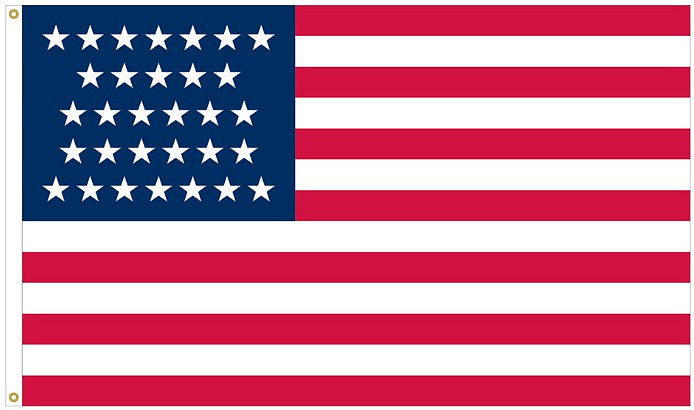
The 31 Star Flag
History of the Flag:
The 31-star US flag, representing California's admission to the Union on September 9, 1850, this flag was official from July 4, 1851, to July 3, 1858.
The flag's seven-year lifespan spanned the following administrations:
Millard Fillmore: (July 10, 1850 – March 4, 1853)
Franklin Pierce: (March 4, 1853 – March 4, 1857)
James Buchanan: (March 4, 1857 – March 4, 1861)
The flag shown here is a legal flag and can be flown at any time.
Source: Smithsonian
Date: July 30, 2026
US Historical Flag on Display:
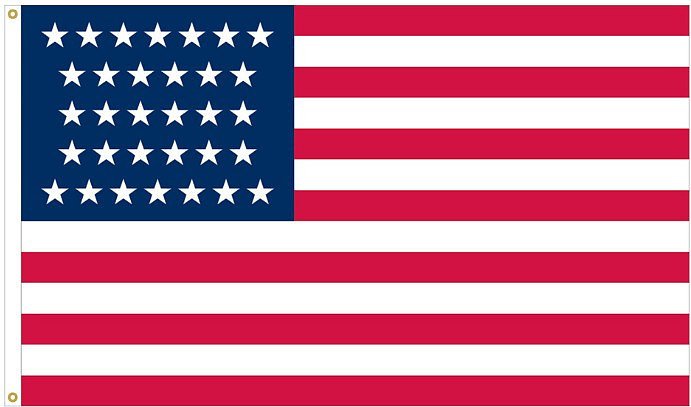
The 32 Star Flag
History of the Flag:
The 32-star U.S. flag became official on July 4, 1858, following Minnesota's admission to the Union on May 11, 1858. It was used for exactly one year until July 3, 1859.
James Buchanan (1857–1861) was the only president to serve under the 32-star flag. Because it was only official for a single year before Oregon gained statehood, it is considered one of the rarer historical flags in U.S. history.
The flag shown here is a legal flag and can be flown at any time.
Source: Smithsonian / militarywives.com
Date: July 31, 2026
US Historical Flag on Display:
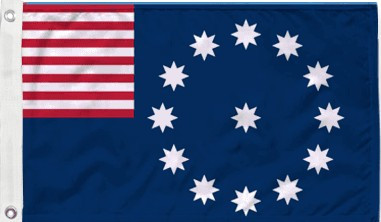
The Easton Flag
History of the Flag:
Local tradition claims the flag was designed by the women of Easton and flown on July 8, 1776, when the Declaration of Independence was first read publicly in Centre Square. If true, this design would predate the standard U.S. flag.
The flag is designed differently from more common flags of the United States in that it has 13 (8-pointed) stars in a blue field, with 13 stripes in the canton. The flag's design is consistent with the 1777 Flag Act, which does not specify the location of the stars and stripes: "That the flag of the thirteen United States be thirteen stripes, alternate red and white; that the union be thirteen stars, white in a blue field, representing a new constellation."
Source: Wikipedia
Date: August 1, 2026
US Historical Flag on Display:
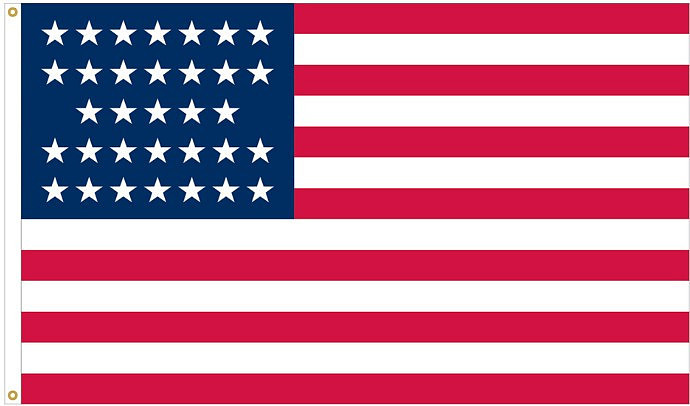
The 33 Star Flag
History of the Flag:
The 33-star U.S. flag flew from 1859 to 1861, representing the addition of Oregon on February 14, 1859.
Two presidents served under this flag: James Buchanan (who was in office when the flag was adopted) and Abraham Lincoln (who served under it at the outbreak of the Civil War).
The 33-star flag became official on July 4, 1859.
Because a new state's star was traditionally added on the 4th of July following its admission, the flag remained at 33 stars even after Kansas joined the Union on January 29, 1861.
It is famously associated with the onset of the Civil War; This is the flag is under which the Army of the Potomac fought the Battle of Fort Sumter: April 12–13, 1861 and First Battle of Bull Run (Manassas): July 21, 1861
The flag shown here is a legal flag and can be flown at any time.
Source: Smithsonian / nationalparkservice
Date: August 2, 2026
US Historical Flag on Display:
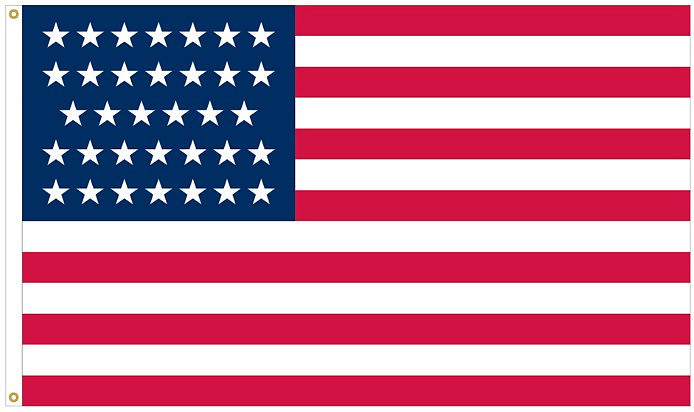
The 34 Star Flag
History of the Flag:
The 34-star flag became official on July 4, 1861, after Kansas became a state, and remained the official flag until July 4, 1863, following the admission of West Virginia.
Buchanan was still in office when Kansas was admitted as the 34th state on January 29, 1861, but the official star-count addition on the national flag did not take effect by law until the following 4th of July, which fell during Lincoln's term.
Abraham Lincoln served as the 16th U.S. President from March 4, 1861, until his assassination on April 15, 1865 (the 34-star flag window spanned from his inauguration into the early American Civil War years of 1861–1863).
During this window the following battles occurred in the Civil War:
Battle of Shiloh (Pittsburg Landing): April 6–7, 1862
Battle of Antietam (Sharpsburg): September 17, 1862
Battle of Fredericksburg: December 11–15, 1862
Battle of Chancellorsville: April 30 – May 6, 1863
Battle of Gettysburg: July 1–3, 1863
Siege of Vicksburg: May 18 – July 4, 1863
It was under this flag that the Emancipation Proclamation was issued by President Abraham Lincoln on January 1, 1863. It freed enslaved people in rebelling states, allowed Black men to join the army, and changed the goal of the Civil War from just saving the Union into a fight to end slavery.
The flag shown here is a legal flag and can be flown at any time.
Source: Kansas Historical Society/Wikipedia
Date: August 3, 2026
US Historical Flag on Display:
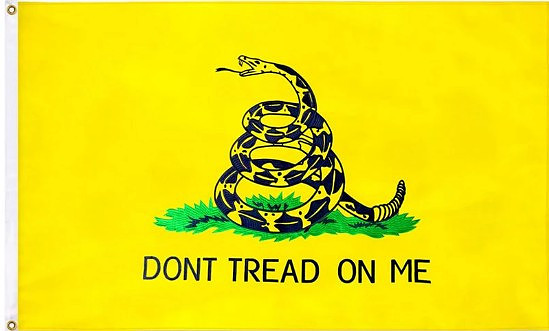
The Gadsden Flag
History of the Flag:
The Gadsden flag is a historic American banner featuring a coiled timber rattlesnake on a bright yellow field with the words "Don’t Tread on Me" printed underneath. Designed in 1775 by South Carolina statesman and general Christopher Gadsden, As the war broke out, Christopher Gadsden expanded on Franklin's metaphor. He designed the solid, coiled version of the rattlesnake to signify that the colonies had reassembled and were ready to strike in self-defense. The flag served as an early rallying symbol for the American colonies during the Revolutionary War.
Today, it remains one of the most recognizable and politically resonant symbols in American history, evolving from an anti-colonial wartime emblem into a modern symbol of individual liberty and anti-government overreach.
Source: Wikipedia
Date: August 4, 2026
US Historical Flag on Display:
The 35 Star Flag
History of the Flag:
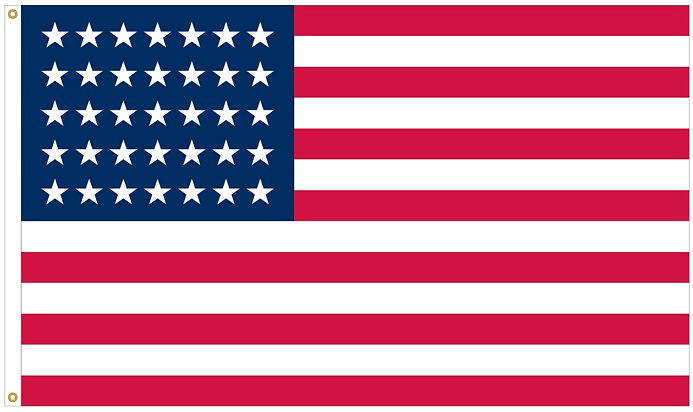
The 35-star American flag represents the addition of West Virginia to the Union, June 20, 1863. This Flag was officially used during the American Civil War from July 4, 1863, to July 4, 1865.
On June 1863, a 35th star was added to the United States flag after Virginians who wished to remain part of the Union created their own state of West Virginia.
During this window the following battles occurred in the Civil War:
Battle of Chickamauga: September 19–20, 1863
Battle of Atlanta: July 22, 1864
Appomattox Court House (Surrender): April 9, 1865
It was also under this flag that Abraham Lincoln delivered his famous Gettysburg Address, on November 19, 1863.
It was this flag that flew at the time of Lincoln’s assassination on April 15, 1865.
Note: Stars were not removed from the U.S. flag during the Civil War because President Abraham Lincoln and the federal government refused to recognize the legality of secession. They viewed the Southern states as rebellious entities rather than a separate, legitimate nation, meaning every state remained constitutionally part of the Union.
Instead of removing stars, the Union actually added new stars to the flag during the war—including Kansas (34 stars in 1861) and West Virginia (35 stars in 1863)—to show that the nation was still growing and unbroken.
The presidents who served under the 35-star U.S. flag were Abraham Lincoln and Andrew Johnson
The flag shown here is a legal flag and can be flown at any time.
Source: Flagsandbanners / Smithsonian / Quora
Date: August 5, 2026
US Historical Flag on Display:
The 36 Star Flag
History of the Flag:
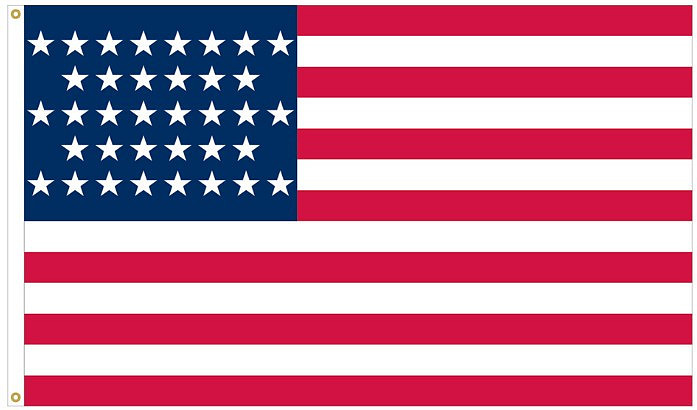
The 36-Star Flag was the official United States flag from July 4th, 1865, to July 4th, 1867, following the admission of Nevada into the Union on October 31st, 1864.
The 36-Star Flag was the official flag when, on Friday the 13th of July 1866, the U.S. Army under regimental commander Colonel Henry B. Carrington began building Fort Phil Kearny.
On October 31st, 1866, a ceremony at Fort Phil Kearny signaled the completion of the fort's construction.
President Andrew Johnson (1865-1869) was the only president to serve under this flag.
Three months before the flag became official, a 36-star flag was used to cushion President Lincoln's head on the night of his assassination at Ford's Theatre on April 14th, 1865.
The flag shown here is a legal flag and can be flown at any time.
Source: fortphilkearny.org
Date: August 6, 2026
US Historical Flag on Display:
Culpepper Minute Men Flag
History of the Flag:
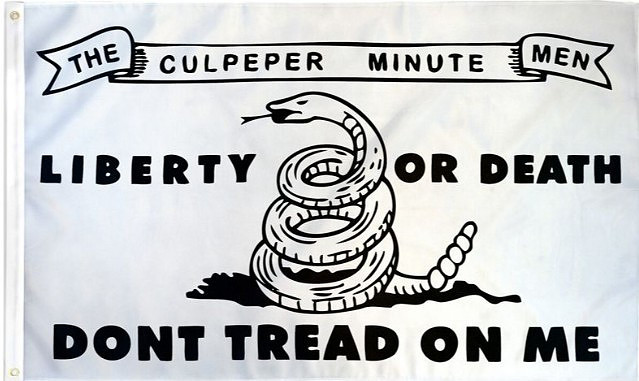
This flag was a prominent battle standard used by a Virginia volunteer militia during the American Revolutionary War. Its symbols and text—a coiled rattlesnake, "Don't Tread on Me," and "Liberty or Death"—collectively expressed the colonists' vigilance, readiness for combat, and absolute refusal to summit to British tyranny.
The slogan “Don’t tread on me” It originates from the Latin phrase “noli me tangere” (“touch me not”) which features in the Gospel of John (John 20:17).
Its meaning was more literal for the colonists: the slogan called for an end to British tyranny. “Liberty or Death” is a quote from Patrick Henry’s “Give me Liberty or give me death!” speech at the Second Virginia Convention on March 23, 1775.
The speech marked a turning point in colonial response to Crown overreach.
Source: AmericanRevolution.org
Date: August 7, 2026
US Historical Flag on Display:
35 Star Medallion Flag
History of the Flag:
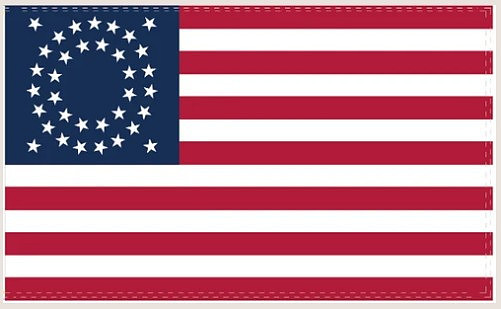
The 35-star U.S. flag was the official banner of the Union during the Civil War from July 4, 1863, to July 3, 1865, representing key states like West Virginia. Historians generally agree that this rare design signifies the shifting boundaries of the Union.
The 35-star flag is the only official star count to fall completely within the active timeline of the mid-Civil War period. The thirty-five-star flag is the only flag that represents a state admitted during the Civil War time period, and that also became official during the Civil War.
The 35-star flag served as the official banner for Union military campaigns during key events like the Battle of Gettysburg, The Gettysburg Address and the end of the Civil War.
The 35 -star flag was the active national flag when the Emancipation Proclamation was enforced in remote areas like Texas on Juneteenth (June 19, 1865).
Because it was official for only about 18 months, authentic antique 35-star flags are exceptionally rare compared to 33-star or 34-star variants.
While the official pattern had rows of stars, which has been displayed earlier, period patriotic flags often featured unique " medallion layouts crafted by local makers, like the one shown above.
Source: bonsellamericana / flagandbanner
TO CONTINUE, PLEASE TAP NEXT POST, THIS WILL TAKE YOU TO THE CONTINUATION OF THE HISTORICAL FLAG PRESENTATION